Saucy meals have a problem when it comes to packaging. The stuff inside wants to spill out, and the box needs to keep it in until the customer gets their hands on it. That means the container needs to handle liquid movement, heat, and food presentation simultaneously. Chinese food boxes are a great example of this.
A Safer Bet for Your Customers
Take a takeout order as it leaves the kitchen; everything is perfect, but by the time it reaches the customer, it’s a whole different story. A sharp turn here, a long drive there, or just a bit of extra sauce can turn a nice meal into a mess.
That’s why Chinese food boxes need to be more than just a container for your food. For restaurants, cloud kitchens, and anyone else who relies on delivery, the box is an extension of the meal itself. It’s got to carry the heat, the moisture, the oil, the sauce, the aroma, and the presentation all at the same time.
The question isn’t just “which box looks good”, it’s “which box will keep my saucy food stable while it’s on its way to the customer?”
It’s all About the Sauce
Chinese food is notorious for its rich sauces, oils, broths, and steams. Dishes like orange chicken, lo mein, chow mein, beef and broccoli, General Tso’s chicken, and fried rice all put a lot of pressure on any old box. But a good Chinese takeout boxes can help solve all these problems by combining a bit of structure, a bit of coating, and proper size control.
Material Choices Matter in Better Growth
The material of the box is the crucial element any packaging can have, and probably the first line of defence against any leaks. A thin, weak board may be suitable for dry snacks, but when it comes to hot, oily, or wet food, it’ll often fail because of the liquid state. For saucy dishes, restaurants need a better solution that is more durable. For example, paperboard that feels sturdy, folds clean, and can maintain its shape under intense heat.
And don’t forget about the changing rules around food contact materials. The FDA has just announced that the PFAS greaseproofing substances we’ve all been using for years are no longer on the market.
The Right Coating Can Make All the Difference
A good coating doesn’t mean you need to go for something heavy and plasticlike. It means the inside of the box should be able to resist sauce and oil for a good long time, long enough to get the food from your kitchen to the customer’s table.
The key is to match the coating to your menu. A noodle house, a fast-casual Asian restaurant, and a catering kitchen are all going to need different Chinese food boxes because their sauces, portions, and delivery routes are all going to be different.
Folding: The Secret To A Leak-Free Box
A lot of the time, leaks come from the folds in the box, not just the flat bits. Corners, flaps, and closure points all put pressure on the box when the food inside is shifting around. A good folding style will help to reduce the gaps where sauce can escape.
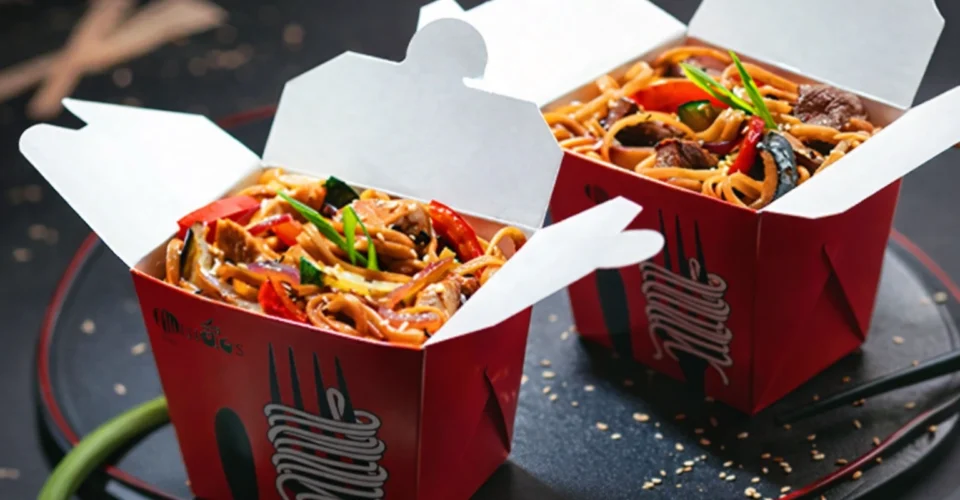
Traditional pail-style Chinese takeout boxes are popular because they fold up into a compact, easy-to-carry shape. But for saucy food, you need to make sure the base of the box stays flat, the side walls stay upright, and the top closure doesn’t crush the food.
Size Really Does Matter in Restaurants, But Few Get It Right
Over-stuffed packaging may look pretty generous, but let’s be honest, it can do more harm than good when it comes to food quality. All that extra space means sauces start spreading across the box, noodles get jumbled on one side, and heavier items put pressure on the seams, all of which can be a disaster.
On the other hand, a box that’s just a bit too small can also cause its own set of problems. It traps too much steam, squeezes the food, and puts a ton of pressure on the lid. This can lead to a meal that’s either soggy or a nightmare to open.
Sizing always matters in the packaging according to the product type and shape. Ultimately, we need the right size box for better handling and shipping, presentation, and stability. Don’t just try it out with some empty samples; either test the size out with the actual menu items a restaurant plans to serve. Fill it up, close it, give it a little shake, and then just let it sit for as long as food would likely spend in a delivery car. That’s a simple test that can reveal a lot.
It’s Not Just About Keeping Food Hot: Heat Retention Is Key
Keeping food hot is important, but just keeping it hot isn’t enough. If there’s nowhere for steam to go, then fried items start losing their texture, and noodles get way too soft. On the other hand, if the box releases too much heat, then the meal arrives cold. That’s just a nightmare for anyone ordering takeout.
That’s where packaging balance really comes in. The right packaging for Chinese food should be able to hold onto warmth while also managing moisture. And if needed, separate out the crispy items from the saucy ones, like fried wontons, egg rolls, or crispy chicken, which are better off in a little separate container or sleeve.
Heat retention works best when a restaurant plans the box size, portion size, and type of food all together.
China’s Takeout Boxes: Some Practical Tips to Follow
When it comes to choosing the right Chinese food containers, it’s all about getting the size right. Don’t test out the most popular saucy dishes with real portions to see what sizes really work. And don’t even get started on how important it is to check the base and corners of the box first. If the sauce leaks during a short test, it will probably be a disaster during delivery.
Also, size isn’t always the only aspect a manufacturer can keep in mind. But the restaurants should be using stronger boards for heavy rice, noodles, and family-sized meals. They should also match the inner coating to the type of sauce, oil level, and expected delivery time.
When it comes to packing food, avoid combining crispy and saucy items unless the dish is meant to soften. And make sure the branding is still readable even if customers handle the box with greasy or wet hands. Also, don’t commit to large-volume packaging without asking for samples first.
Good Packaging Choices Matter
For any restaurants or food businesses in the USA that want custom packaging built around their real menu needs, Multiple Packages offers custom packaging options across food and beverage, retail, beauty, healthcare, gift, and consumer product categories. And with their customization choices, including sizes, colors, designs, die cutting, lamination, embossing, debossing, and other finishing options, businesses can create packaging that’s both practical and visually consistent.
When it comes to saucy meals, a custom approach really does matter because standard packaging just can’t always fit the food. A restaurant may need branded takeout boxes for single meals, larger boxes for catering, or different structures for delivery orders.
Faq’s
What are the Chinese food boxes you should be using for saucy meals?
The best option is likely a sturdier, food-grade paperboard box with a grease-resistant lining inside, folds that keep everything together securely, and that aren’t too big for the portion. You want the box to contain the food, but not squish it.
Do Chinese takeout boxes really stop leaks?
They can certainly reduce leaks if all the right elements come together with the box material, any coating it has, exactly how it’s folded, and the right amount of food. Still, really saucy meals might still require a bit of extra help, say a side of sauce or a sealed insert.
How do Chinese food boxes manage to keep meals warm?
They just hold heat by being nice and tight, with the right thickness of board and a proper seal. The problem is, you gotta find that sweet spot between keeping things hot and letting a bit of steam out, or the food’s gonna end up in a sorry state.
Are the coated takeout boxes safe to use for food?
When it comes to food packaging, you want to make sure you’re using materials that are safe to come into contact with the food you’re serving. And it’s up to the restaurant to make sure any coatings they’re using are actually designed for use on fried or soupy meals.
Should every dish be packaged in the same-sized box?
Absolutely not. Different dishes behave in completely different ways during a delivery; noodles and fried foods behave a lot differently than soups or steaming hot, saucy entrees.
Can branded packaging actually improve the customer experience?
Yeah, for sure. But the thing is, no matter how nice the box looks, it won’t do you much good if it can’t keep the food from getting all over the place when it arrives. You’ve got to make sure the box is performing first, then you can worry about making it look pretty.
Wrapping Up
When it comes to saucy meals, you need more than just some neat packaging. You need a box that can handle all the messy stuff without creating a huge problem. In other words, savoury Chinese food boxes that can deal with oil, moisture, heat, movement, and presentation without being a complete disaster. Boxes that can keep the food safe, reduce the risk of spills, carry your brand, and give customers a clean, fresh takeout experience from open to swallow. If you can get that right, protect that sauce, keep that food hot, carry that brand, how much better could every delivery order feel?