
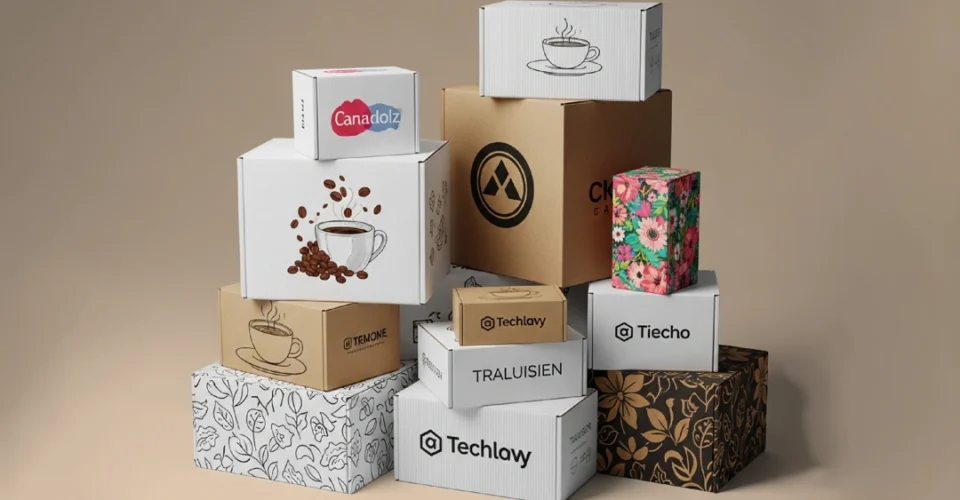
Businesses always face problems because of packaging and shipping. These are the most crucial aspects any business can go through in its operations, while inventory never always begins with a stock management mess. However, they often get started with inconsistent packaging design and brand image. By using wholesale custom boxes that are standardized in size and specs, businesses can store inventory way more efficiently, simplify the picking and packing process, reduce the number of handling errors, and boost inventory accuracy without breaking the bank on packaging.
Introduction
As a business grows, the complexity of managing inventory grows right along with it. There are the new product lines, seasonal demand, and multiple sales channels to deal with, which all too often result in dozens of different box sizes cluttering up your warehouse space. And while companies often splurge on inventory software or rent more storage, they sometimes completely overlook a much simpler solution: smarter packaging.
The right wholesale custom boxes will do more than just protect your products during shipping. When designed with inventory operations in mind (and not just product dimensions), they can help reduce clutter in the warehouse, improve your ability to keep track of stock, and make getting orders out the door a whole lot faster. Standardized custom packaging boxes make it easier for businesses to keep their packaging expenses under control while simplifying storage.
How Random Box Sizes Create Inventory Mayhem
Many businesses gradually accumulate all sorts of different packaging without ever following any kind of system. New suppliers start introducing different dimensions, different departments go out and order packaging by themselves, and temporary solutions just end up becoming permanent.
| Common Packaging Problem | Impact on Inventory Operations |
| Too many box sizes | Difficult warehouse organization |
| Mixed packaging suppliers | Inconsistent storage requirements |
| Oversized shipping boxes | Wasted shelf and pallet space |
| Different labeling methods | Slower inventory tracking |
| Excess packaging stock | Higher storage costs and dead inventory |
Why Standardized Wholesale Custom Boxes Make Inventory Management So Much Easier
Standardizing your packaging is one of the simplest (and most effective) ways to boost warehouse efficiency without having to make any major overhauls.
If you manufacture dozens of different packaging variations, that can be a real mess for your operational efficiency. So businesses can develop a carefully curated selection of wholesale custom boxes that can handle most of their product line. Fewer box sizes means fewer storage locations to keep track of, simpler inventory planning, and predictable purchasing.
Well-designed custom packaging boxes can actually be engineered to handle multiple products while still fitting just right and lasting the whole way.
Fewer Packaging SKUs Means Better Inventory Control
Every additional packaging SKU you add to the mix means another item that needs to be purchased, counted, stored, replenished, and tracked.
Reducing unnecessary packaging variations offers all sorts of operational benefits:
Better Stock Visibility
With fewer packaging types, your warehouse team can instantly see what inventory is available, rather than having to search all over the place.
Faster Inventory Audits
Cycle counts become a whole lot quicker when staff have to verify fewer packaging materials.
Easier Purchasing
Procurement teams can place bigger, more predictable orders, rather than having to constantly buy small quantities of different boxes.
Less Overstocking
When you rely on standardized packaging, you’re way less likely to end up with unused box sizes that eventually become obsolete and just take up space.
Streamlining Picking and Packing Without Increasing Labor
Picking and packing are some of the most repetitive tasks in any warehouse. Even the smallest delays multiplied across hundreds of daily orders can really add up and affect productivity.
When employees are working with standardized custom packaging boxes, the decision-making process becomes way simpler. They can spend less time trying to figure out which box fits each order and more time getting orders out the door on time.
Consistent packaging also makes it a lot easier to keep packing stations organized. Workstations require fewer packaging materials, which makes them a lot easier to keep tidy all day long.
Maximising Storage Capacity Without Breaking The Bank: Warehouse Optimisation Tactics
Warehouse expansion is a costly exercise that many businesses would rather avoid, but in all too many cases the reason it’s needed is because of inefficient packaging practices. Boxes that are too big or too varied create a mess on your shelves; they don’t stack properly, they take up too much space on your pallets, and make it a nightmare trying to get a handle on your stock levels.
By switching to custom boxes in bulk, you can really make the most of the space you already have. When all your boxes are the same size, products stack neatly on shelves, fit together perfectly on pallets, and it’s a whole lot easier to plan your stock levels. As a result, companies often find they end up using the space they already have, rather than having to fork out for more shelving or renting extra warehouse space.
Cutting Packaging Costs Without Sacrificing On Quality
You don’t have to cut corners on packaging just to save money. In fact, in many cases businesses end up saving more cash by streamlining their packaging processes rather than trying to cut packaging costs by buying cheap materials.
When you start to plan your packaging as part of your overall inventory management, you’ll often see a whole host of benefits such as fewer mistakes, less storage space needed, less waste, faster order fulfilment, and lower labour costs due to fewer errors.
Rather than constantly having to order in small quantities of different packaging styles, you can buy custom boxes in bulk in larger, more planned quantities, while still maintaining the same level of quality. And when you can track your packaging usage alongside your product stock, you’ll find it’s a lot easier to get your purchasing forecasts bang on.
Practical Tips For Streamlining Your Packaging Inventory
- First off, standardise the box sizes that you use the most, rather than creating a different size for every product
- Take a good hard look at your packaging inventory every quarter, and get shot of any box sizes that are hardly ever used
- Store your packaging materials by order volume, rather than by the supplier who provided them
- Make sure your packaging storage areas are clearly labelled, to reduce the number of picking errors you make
- Keep a track of your packaging usage, alongside your product stock, to help you plan your purchasing better
- And finally, whenever possible, design custom boxes that can accommodate multiple products at once
It’s the small changes like these that can really make a difference without having to break the bank on your packaging budget.
Frequently Asked Questions
Do wholesale custom boxes really help cut inventory costs?
Yes, they do. While it’s not always the case that the box itself will be cheaper, having standardised packaging can make a big difference by cutting down on storage inefficiencies, simplifying the purchasing process, saving time for staff, and reducing the costs of managing your inventory.
How many box sizes do I need to keep stock of?
There’s no one-size-fits-all answer, but what usually works best for businesses is having a small range of box sizes that cover most of your products without having too many duplicates that you end up carrying around.
Are custom packaging boxes any good for companies with a big product range?
Absolutely, many companies use modular systems where a smaller number of box sizes can be used for multiple product categories. This makes life a lot easier for the warehouse staff.
Do custom packaging boxes make a difference to warehouse productivity?
They can when packaging is consistent; it cuts down on the need for staff to make decisions, makes the picking and packing process a lot quicker, and generally results in a more organised warehouse.
How does Multiple Packages help with inventory-friendly packaging?
Multiple Packages works with businesses across the USA to develop custom packaging boxes that balance product protection, efficiency, and growth. By helping companies standardise their packaging without losing any quality, their solutions help keep warehouse operations running smoothly as businesses grow.
Conclusion
Inventory management is not just about software, forecasting, or warehouse layouts; sometimes the biggest improvements come from simplifying the materials we use every day. Standardised wholesale custom boxes can help businesses reduce storage clutter, organise their warehouses, streamline the order fulfilment process, and maintain better control over their inventory without costing more to use.
As operations get bigger, choosing packing that makes sense becomes just as important as choosing packing that protects the products. For businesses looking to get their order fulfilment in order. Building a more streamlined process, working with an experienced packing partner like Multiple Packages. Can make that transition a lot easier and keep your long-term goals in view. Are your current packing systems helping your inventory get on top of things, or just adding to the chaos?