
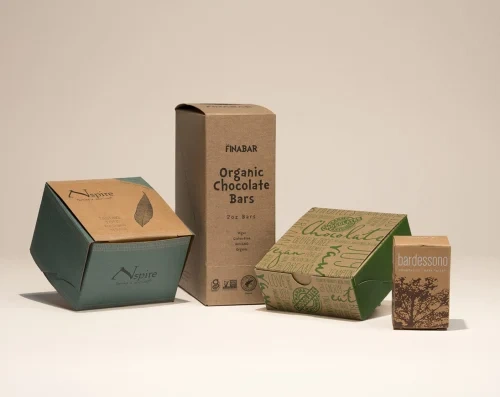
The “right” ecommerce box is NOT just the smallest box that holds a product; it’s the one that somehow balances the combined cost of dimensional weight charges and materials, packing labor, damage, returns, and customer service. This is the balance that should guide every box decision you make.
Oversized boxes just end up making carriers transport bunches of empty space, which adds up fast, while boxes that are too tight or weak can just transfer the impact directly onto the product. As a growing seller, you should be selecting your custom cardboard cartons based on your shipping and damage data rather than just looking at supplier price.
Why Box Size Really Matters
DIM Weight Charges are a Cost You Don’t Want
The big parcel carriers all compare actual weight with dimensional weight, and they tend to bill you the higher figure. DIM weight is basically how long, wide, and tall your box is then you divide that by some goofy number that’s different for every carrier, so you need to check with them to see what that number is. You can usually find it in your account agreement or by calling them up.
Here’s the thing: custom cardboard cartons can often outperform the standard boxes you get from suppliers. Just by shaving off a few inches here and there, you may be able to reduce your DIM charges on every single parcel, especially if you’re shipping things like clothes or cosmetics or toys or subscription boxes or home decor.
Find the Lowest Total Cost, Not the Smallest Box
| Carton approach | Shipping cost | Damage risk | Fulfillment impact |
| Oversized stock box | High DIM exposure | Movement and scuffing | More filler and slower packing |
| Extremely tight box | Lower dimensions | Compression and impact transfer | Difficult loading |
| Right-sized carton | Controlled DIM weight | Space for targeted protection | Repeatable packing process |
The target is the point where reducing volume no longer delivers useful freight savings, or where the next size reduction increases damage costs. This “lowest total cost” method is more reliable than choosing from product dimensions alone.
A Four Step Box Sizing Process
1. Group Orders Together
You should be designing your boxes based on how you’re actually shipping things, not just individual products. A single skincare bottle may be shipped by itself or as part of a gift set. So group your products together based on their shape, weight, fragility, and common bundles.
Too many box sizes and things start to get complicated and hard to keep track of. Too few and you’re leaving money on the table. You want to build a box range that covers the most common orders you make.
2. Measure What You’re Shipping
When you’re measuring the product for the box, you need to make sure you’re measuring what it’s going to look like when it’s all packed up and ready to ship. That means with the retail box and packaging and inserts and padding all included. Measure the external dimensions after you close the box, because that’s what the carrier is going to be measuring.
If you’re searching for cardboard box manufacturers USA, make sure you know whether the dimensions they’re giving you are internal or external. That can make a big difference in how well the product fits and how much you’re going to get charged by the carrier.
3. Test the Box Like It’s Going to Be Used
No matter how hard you try to design the perfect box, you can’t just guess how it’s going to hold up in real shipping conditions. You need to test the box to see how it holds up to being dropped, compressed, and shaken around.
The board and the inserts need to be able to withstand the weight and the journey the product is going on. Fitted inserts are often better than just loose padding because they control the movement of the product inside the box. And make sure your box is sturdy enough that it won’t break or collapse when the product inside is bouncing around.
Carrier guidelines actually stress all these things too: sturdy boxes with proper cushioning and sealing and minimal movement.
Total Packaging Cost Per Order = Carton + Insert + Filler + Labour + Freight + Expected Damage Cost
The expected damage cost is the damage rate multiplied by the average cost of each incident. That way, custom cardboard cartons are a no-brainer operating decision; you can actually see whether they’re worth the investment.
What to Expect from a “Cardboard Box Manufacturers USA” Search
When you search for a “cardboard box manufacturers USA” the suppliers you come up with should actually be looking at product weight, how fragile it is, what kind of orders you’re sending them, how quickly you need the boxes packed, any carrier restrictions, what print work you need, if you have any sustainability targets, and what kinds of storage limits you have not just the dimensions of the box.
Multiple Packages: one of the leading packaging companies can support structural engineering, custom dielines, 2D and 3D visualisation, samples, prototyping, testing, inserts, branded printing, and eco-friendly options. That makes them a one-stop shop for durable, cost-conscious, and brand-focused packaging needs in e-commerce, retail, beauty, food, electronics, and loads of other industries.
Practical Tips Before Production
- Ask for the finished external dimensions before you start ordering.
- Compare carrier charges by using some packed samples.
- Try out single-item and multi-item orders to see how they work in the real world.
- Use inserts to keep things from moving around too much.
- Review your damage rates by size, SKU, destination, and carrier to see where you can improve.
- Check your box sizing again after you make any changes to your products.
Frequently Asked Questions
How Much Space Should Be Left Inside the Box?
You want to leave just enough space for some cushioning, inserts, and easy packing. Something like flexible clothing doesn’t need much clearance, but more delicate products do need more careful protection.
Does a Bigger Box Always Reduce Damage?
Not always. I recommend adding extra cushioning in the extra space. But if there’s too much empty space, that can just end up causing more movement and damage.
How Often Should You Review Your Box Sizes?
You should review them when you make any changes to your products, update your carrier arrangements, change your fulfillment system, or if your damage rates start to rise. High-volume sellers might need to review their performance every 3 months.
Are Custom Cardboard cartons a Good Choice for Startups?
Actually, yes, if you’re doing a lot of volume, if you’re at risk of a lot of damage, or if your branding requirements need customisation. Start with a few simple sizes that will work for you and then expand based on your order data.
What Should You Look for in a Supplier?
You want a supplier that actually asks for your dimensions, packed weight, how fragile the product is, your volume, how you prefer to bundle things, how you ship, and what kind of damage history you have. They should also want to know about your storage limits, any artwork you have, and your sustainability goals.
Conclusion
The best box strategy is one that balances two costs that are always moving in opposite directions: DIM weight and product damage. If you can design custom cardboard cartons that use less cube without sacrificing protection, then that’s a recipe for success. And when you’re searching for “cardboard box manufacturers USA,” look for suppliers who are willing to test their boxes on both freight and damage performance. Might Multiple Packages be just the people to help you find the right box for your next packaging project?