
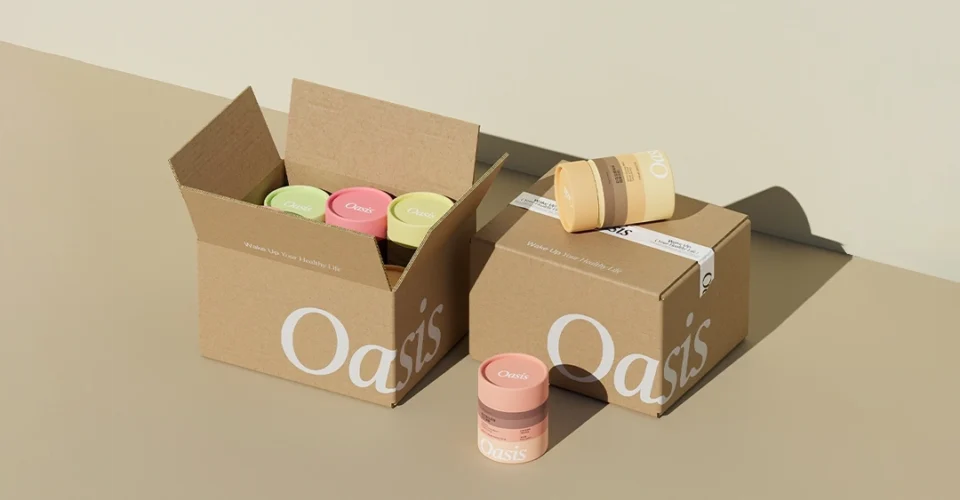
The plain brown shipping box had a good run. For decades, it was the default, cheap, functional, and completely forgettable. But in 2026, forgettable is fatal for any e-commerce brand that wants to grow. Custom shipping boxes have moved from a premium optional extra to a baseline expectation for modern online shoppers. Research confirms that 61% of consumers say premium packaging makes them more excited about a product and directly influences their decision to repurchase.
Furthermore, 88% of shoppers are more likely to make repeat purchases after a positive unboxing experience. Those numbers make one thing clear: the plain brown box is not saving money. It is costing revenue. In this post, we break down exactly why shipping boxes have become non-negotiable for serious e-commerce brands.
Why Custom Shipping Boxes Are Now a Core Brand Asset?
The global custom packaging market is valued at approximately $120 billion in 2025 and is projected to grow at a CAGR of 4.8% through 2035. Product protection needs do not drive that growth; corrugated cardboard solved that problem decades ago. It is driven by brand strategy. The market is evolving from a commoditized supply chain input into a strategic brand asset and consumer engagement tool.
Your Box Is Your Only Physical Touchpoint
In e-commerce, a brand has no storefront, no shelf presence, and no salesperson standing beside the product. For e-commerce brands, the shipping box is the only physical touchpoint with the customer. That single moment, when a package arrives at a doorstep, is the entire physical brand experience. A plain brown box with a printed label communicates nothing, and a custom shipping box with brand colors, a logo, a tagline, and a thoughtfully designed interior communicates everything.
Furthermore, that box travels through neighbourhoods, building lobbies, and office mail rooms on its way to the customer. Every person who sees it is a potential impression, free advertising that a plain box wastes entirely.
The Unboxing Economy Is Real and Measurable
The unboxing experience has become the new point of differentiation for Shopify and Amazon FBA brands alike. Unboxing videos generate hundreds of millions of views monthly across TikTok, YouTube, and Instagram. Customers film their deliveries. They share them, and they tag brands. A custom shipping box designed for visual impact becomes organic user-generated content that reaches audiences the brand never paid to reach.
Additionally, the design standards for this content are clear. Minimal, bold branding that photographs well. Strong typography. A clear logo. Consistent color story inside and outside the box. These are not aesthetic preferences; they are conversion tools.
5 Business Reasons Custom Shipping Boxes Outperform Plain Packaging
Beyond brand impressions, the case for shipping boxes has a concrete financial foundation that every e-commerce business can measure.
1. Repeat Purchase Rate Increases Directly
Studies show that 52% of customers are more likely to purchase again if they receive products in premium packaging. And 88% of shoppers are more likely to make repeat purchases after a positive unboxing experience. For any e-commerce brand where customer lifetime value is the primary growth metric, those percentages represent measuring a box for shipping revenue attached to a packaging decision.
2. Perceived Product Quality Rises Without Changing the Product
Modern consumers associate packaging quality with product quality. A premium package gives customers confidence in the purchase experience. That perception premium supports higher price points without changing a single ingredient or component.
3. Right-Sized Custom Boxes Reduce Shipping Costs
Plain stock boxes are ordered in standard sizes, which often results in oversized boxes for smaller products, filled with excess void-fill material. Oversized boxes inflate dimensional weight (DIM weight) charges from carriers, which directly increases per-shipment costs. Custom shipping boxes sized precisely to the product eliminate unnecessary DIM weight charges, reduce void fill usage, and lower total fulfillment cost per order. Furthermore, right-sized packaging reduces the “box guilt” customers feel when they open a large box containing a small product surrounded by plastic filling.
4. Sustainability Credentials Become Visible
In 2026, sustainable packaging is not a marketing add-on; it is a purchase criterion. Custom shipping boxes made from recycled corrugated board, printed with water-based inks, and sized for material efficiency. Choosing recyclable packaging boxes or plastic-free packaging for e-commerce cuts landfill waste and can lower shipping costs. That combination of environmental benefits and cost efficiency makes sustainable shipping boxes the financially and strategically correct choice
5. Brand Consistency Across Every Order
Every order a brand ships is a brand interaction. When every box looks the same, customers build recognition across multiple purchases. And when customers repeatedly see branded boxes, printed mailers, logos, colors, and messaging, your business becomes easier to remember. Consistent packaging strengthens identity across all customer touchpoints. That brand recall is what turns a one-time buyer into a loyal customer who recommends the brand to others.
Getting the Dimensions Right Before You Order
One of the most overlooked steps in ordering custom shipping boxes is taking accurate measurements. Getting this wrong wastes money on oversized boxes, increases DIM weight charges, and creates a poor unboxing experience with excess space inside the package.
When measuring a box for shipping, always measure the interior dimensions for product fit and the exterior dimensions for carrier rate calculation. The difference between interior and exterior measurements depends on the board thickness, typically 3mm to 6mm for standard corrugated shipping boxes. Additionally, always add a small clearance allowance, typically 5mm to 10mm, to each interior dimension to ensure the product slides in and out cleanly and without force.
For measuring a box for shipping with inserts, trays, or tissue paper layers, measure the final packed product height. This includes all interior packaging components before specifying the box height. A box that fits the product perfectly without inserts may be too short once tissue paper and a branded card are added.
At Multiple Packages, we guide every client through the accurate specification of dimensions before production begins. So every custom shipping box arrives sized precisely to its contents with zero wasted space and zero DIM weight inflation.
Every Box You Ship Is a Brand Decision
The plain brown box was never really neutral. It was a statement that packaging did not matter, that the product was enough, and that the delivery experience was purely functional. In 2026, customers, competitors, and the data all disagree. At Multiple Packages, we build shipping boxes for e-commerce brands at every stage of growth, from 100-unit startup orders to high-volume wholesale production. Every box is designed to protect your product, represent your brand, and deliver the kind of unboxing experience that turns first-time buyers into loyal customers.
Explore our full range of shipping boxes at Multiple Packages and request your free quote today. Because in 2026, the box you ship in is the brand you are.