
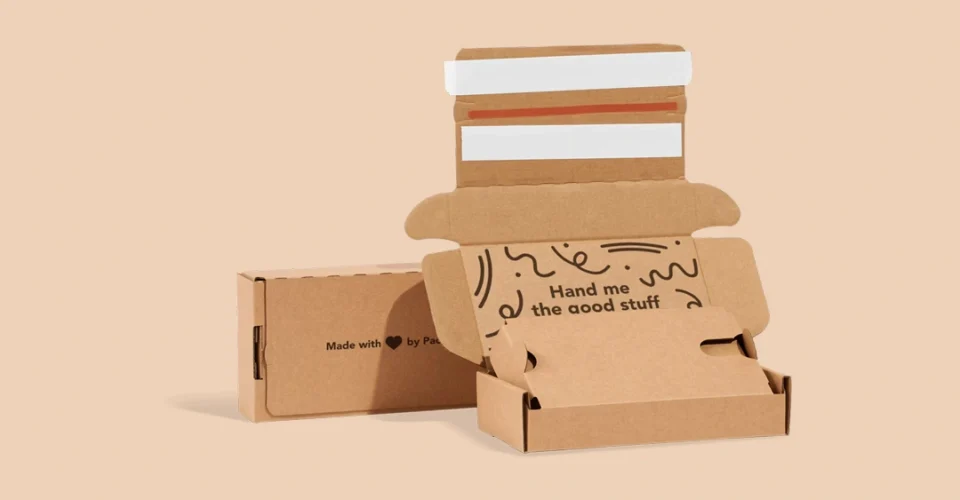
Buying clothes online has changed dramatically. These days, you can order three different sizes, try them on at home, keep the one that fits, and send the rest back within days. Great for sales. Not so great for packaging, especially when it comes to custom cardboard boxes.
Most fashion brands still treat packaging like an afterthought, something the customer chucks out the moment the parcel lands on their doorstep. That approach doesn’t really cut it anymore. A box needs to handle delivery, survive a return journey, meet sustainability expectations, and still look decent for the brand. That’s a lot to ask of a rectangle of cardboard and boxes.
Why fashion e-commerce has a packaging problem
A lot of online shoppers order multiple sizes and colours because they can’t feel the fabric or know how something will fit until it’s actually on. So the box arriving isn’t the end of the process; it’s the start of the return leg, too.
Standard packaging struggles here. Flimsy walls, flaps that snap off, boxes three times bigger than the item inside. All of it makes returns more annoying for the customer and slower to process for the retailer. Design the box with the return trip in mind from the start, and a lot of that friction disappears.
Easy returns are good customer service
Returns aren’t just a logistics headache. They’re a real part of the customer experience, and often the moment a brand earns or loses a repeat buyer.
A sturdy box that has a proper tear strip, reseals cleanly, and carries clear return instructions removes most of the frustration from the process. The customer feels like the brand thought ahead for them. That matters because convenience is what people actually want. A smooth return after a duff purchase can still bring someone back. A difficult one usually won’t.
What waste say about a brand
Customers notice oversized cardboard and boxes. They notice bags of void fill for a single folded shirt. Even if the product itself is excellent, excessive packaging makes the brand look sloppy and indifferent.
Reusable boxes change that story. One box handles delivery, enables returns, and cuts out extra packing materials entirely. That doesn’t require luxury packaging; some of the best solutions are just right-sized, structurally solid, made from recyclable materials, and designed so they can be resealed without falling apart. The impression it leaves is that the brand actually thought about what happens after the customer opens it.
Custom Cardboard Boxes let style and substance coexist
Fashion packaging has to do more than survive shipping. It also has to fit the brand.
A premium label needs something sleek, considered, and a bit understated. A streetwear brand might want bold print and heavy structure. A sustainable clothing company probably wants minimal ink, recycled board, and nothing that screams effort. Custom cardboard boxes give brands full control over size, structure, finish, and print, so the box feels like it belongs with the product rather than just wrapping it.
A shoe brand needs a box that protects the shape. A boutique needs something lightweight for folded garments. A subscription service needs a box that’s nice to open and still functional for exchanges. There’s no single answer, which is exactly why off-the-shelf packaging so often falls short.
The return journey matters at the warehouse too
Once a return gets back to the warehouse, the state of the packaging affects how quickly the team can inspect, sort, and restock the item. A battered box makes that job slower and increases the chance of error. A well-designed return box with the right product fit, clear branding, and space for a label keeps things moving.
It’s a small thing, but it adds up across hundreds of returns a week.
Packaging and customer loyalty
Fashion brands spend heavily on ads, photography, and web design. But once the order ships, the physical box is the only brand touchpoint that matters. A reusable box signals that the brand is thinking about the whole experience, not just the sale.
Customers don’t have to tear anything apart to get to their order. They don’t feel guilty about the waste. And when it comes to talking about the brand, or deciding whether to order again, that kind of friction-free experience sticks.
What Multiple Packages brings to this
U.S. fashion retailers looking to refresh their packaging without losing brand identity have options worth knowing about. Multiple Packages focuses on durability, customisation, and practical performance, not just aesthetics. They work with businesses to develop custom cardboard boxes that can handle shipping, storage, retail display, and high-volume fulfilment without falling apart or looking generic.
Fashion packaging varies enormously by business type. A small handmade clothing label needs flexibility and short runs. A growing online store needs robust boxes that can take volume and carry branding. A retail fashion brand needs something polished enough for the shelf and practical enough for delivery. Good packaging design takes all of that into account from the beginning.
Features worth thinking about
When choosing packaging, the structure matters as much as what’s printed on it. A reusable box needs to open cleanly without tearing, hold its shape through shipping, fit the product without extra padding, and leave room for return labels or care cards. It should look good on the first open too. That first moment still counts.
Custom cardboard boxes can also include interior printing, QR codes for returns, size-swap instructions, or product care guides. These touches make the box more useful without making it feel cluttered.
Packaging as a business decision
The best fashion brands don’t just see packaging as somewhere to put a logo. They see it as part of cost control, customer support, and sustainability.
A reusable box reduces return complications. A right-sized box cuts material waste. A stronger box protects the product. A well-branded box makes a better impression. When those things come together, the packaging earns its cost rather than just adding to it.
In fashion eCommerce, the box isn’t just a delivery vehicle. It’s part of the entire experience.
The bottom line
Customers want products that arrive in good shape, look like they were packed with care, and are easy to return if they don’t fit. Reusable packaging does all three. It protects the product, reduces waste, simplifies returns, and gives the brand a more considered image.
If a fashion brand is already putting serious effort into better products and better service, the packaging should be doing the same work, not undoing it.